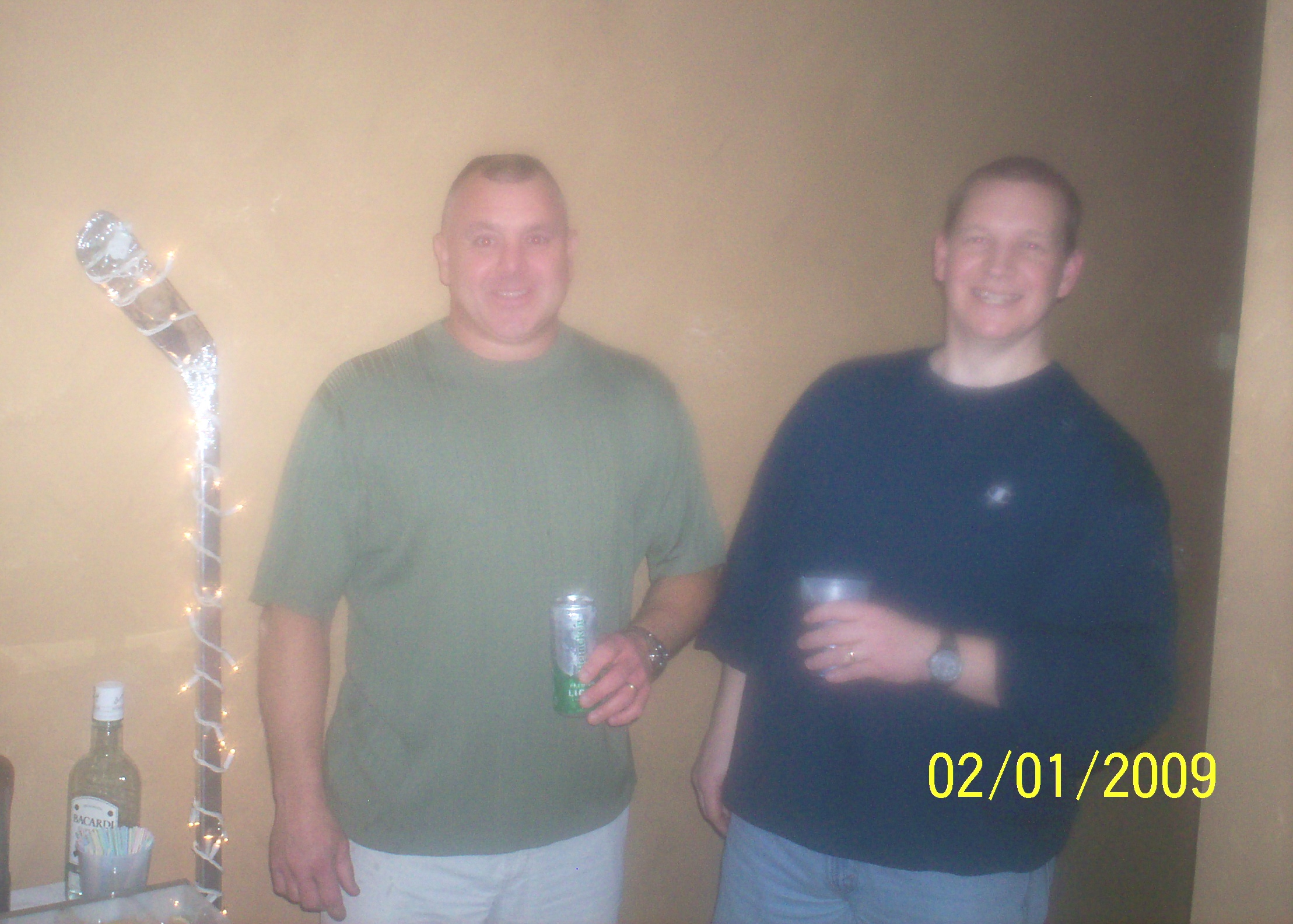
George get out the Festivus Pole.
Festivus History
(Thanks to Wikipedia)
Although the original Festivus took place in February 1966 as a
celebration of the elder O'Keefe's first date with his future wife,
Deborah, many people now celebrate the holiday on December
23, as depicted on the December
18, 1997 Seinfeld
episode "The
Strike". According to O'Keefe, the name Festivus "just
popped into his head".
Practices
The holiday includes novel practices such as the "Airing of
Grievances", in which each person tells everyone else all the ways
they have disappointed him or her over the past year. Also, after the
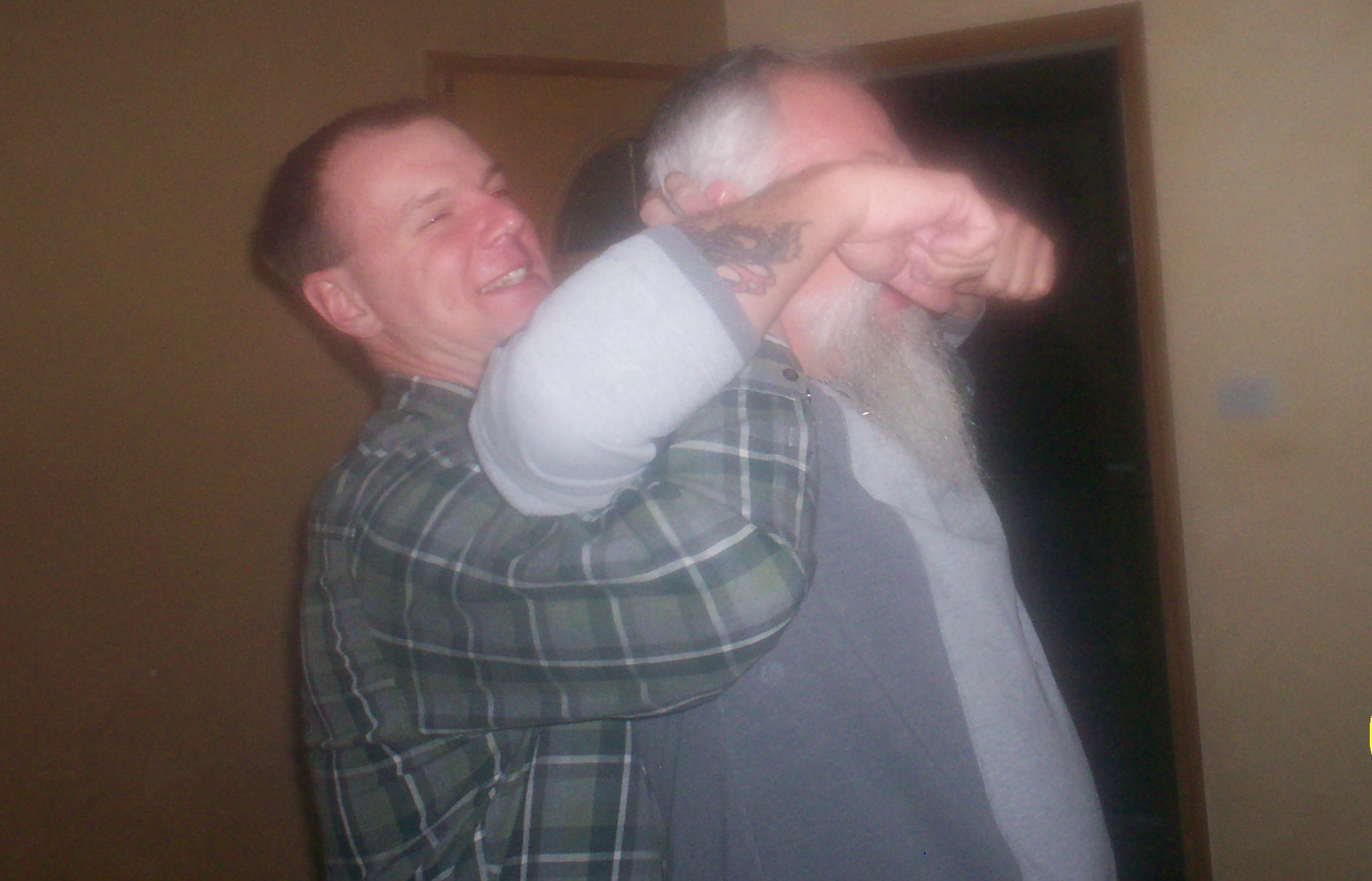
Festivus meal, the "Feats of Strength" are performed, involving
wrestling the head of the household to the floor, with the holiday ending
only if the head of the household is actually pinned.
These conventions originated with the TV episode. The original holiday
featured far more peculiar practices, as detailed in the younger Daniel
O'Keefe's book The Real Festivus, which provides a first-person
account of an early version of the Festivus holiday as celebrated by the
O'Keefe family, and how O'Keefe amended or replaced details of his
father's invention to create the Seinfeld episode.
Some people, influenced or inspired by Seinfeld, now celebrate
the holiday in varying degrees of seriousness; the spread of Festivus in
the real world is chronicled in the book Festivus: The Holiday for the
Rest of Us.
Rituals
Festivus is introduced in "The
Strike", which revolves around Cosmo
Kramer returning to work at H&H
Bagels. He does so after learning that a 12-year strike in which he
participated has ended (because the minimum wage has risen to the level of
the wages demanded by the workers twelve years earlier). Kramer becomes
interested in resurrecting the holiday when at the bagel shop, Frank
Costanza tells him how he created Festivus as an alternative holiday
in response to the commercialization of Christmas.
- Frank Costanza: Many Christmases ago, I went to buy a doll
for my son. I reached for the last one they had, but so did another
man. As I rained blows upon him, I realized there had to be another
way.
- Cosmo Kramer: What happened to the doll?
- Frank Costanza: It was destroyed. But out of that a new
holiday was born: a Festivus for the rest of us!
Frank Costanza's son, George
(Jason
Alexander), creates donation cards for a fake charity called The
Human Fund (with the slogan "Money For People") in lieu of
having to give office Christmas presents. When his boss, Mr.
Kruger (Daniel
von Bargen), questions George about a US$20,000 check he gave George
to donate to the Human Fund as a corporate donation, George hastily
concocts the excuse that he made up the Human Fund because he feared
persecution for his beliefs, for not celebrating Christmas, but
celebrating Festivus. Attempting to call his bluff, Kruger goes home with
George to see Festivus in action.
Kramer eventually goes back on strike from his bagel-vendor job when
his manager tells him he cannot have time off for his new-found religious
holiday. Kramer is then seen on the sidewalk picketing
H&H Bagels, carrying a sign reading "Festivus yes! Bagels
no!" and chanting to anyone passing the store: "Hey! No bagel,
no bagel, no bagel..."
Finally at Frank's house in Queens, Jerry, Elaine, Kramer, and George
gather to celebrate Festivus. George brings Kruger to prove Festivus is
real.
Festivus Pole
In the episode, although not in the original O'Keefe Family
celebration, the tradition of Festivus begins with an aluminum
pole. During Festivus, the Festivus Pole is displayed unadorned. The
basics of the Festivus pole are explained by Frank in two separate
situations:
- Cosmo Kramer: And is there a tree?
- Frank Costanza: No, instead, there's a pole. It requires
no decoration. I find tinsel
distracting.
- Frank Costanza: It's made from aluminum. Very high
strength-to-weight ratio.
When not being used, the Festivus Pole is stored in the Costanzas' crawlspace.
The world's tallest Festivus Pole is currently located at the College
Perk Coffeehouse in College Park, MD. It is generally on display from
early November through February.[citation
needed]
Festivus Dinner
In "The Strike", a celebratory dinner is shown on the evening
of Festivus prior to the Feats of Strength and during the Airing of
Grievances. The on-air meal appeared to be meatloaf
or spaghetti
in a red sauce. The original holiday dinner in the O'Keefe household
featured turkey or ham followed by a Pepperidge
Farm cake decorated with M&M's,
as described in detail in O'Keefe's The Real Festivus. In Festivus:
The Holiday for the Rest of Us by Allen
Salkin, modern observances of Festivus tend to feature heavy
drinking. In the Seinfeld episode, no alcohol is served, but George
Costanza's boss, Mr. Kruger, drinks from a flask.
Airing of Grievances
The celebration of Festivus begins with Airing of Grievances, which
takes place immediately after the Festivus dinner has been served. It
consists of lashing out at others and the world about how one has been
disappointed in the past year. Every household has its own traditions; in
one house, the Airing of Grievances consisted of writing the grievances on
the fridge in marker.
- Frank Costanza: And at the Festivus dinner, you gather
your family around, and tell them all the ways they have disappointed
you over the past year!
- Frank Costanza: The tradition of Festivus begins with the
Airing of Grievances. I got a lot of problems with you people! And
now, you're gonna hear about it. You, Kruger. My son tells me your
company STINKS!
- George Costanza: Oh, God.
Feats of Strength
The Feats of Strength is the final tradition observed in the
celebration of Festivus, celebrated immediately following (or in the case
of "The Strike", during) the Festivus dinner.
Traditionally, the head of the household selects one person at the
Festivus celebration and challenges that person to a wrestling
match. The person may decline if they have something else to do, such as
pull a double shift at work. Tradition states that Festivus is not over
until the head of the household is pinned in a wrestling match. The Feats
of Strength are mentioned twice in the episode before they actually take
place. In both instances, no detail was given as to what had actually
happened, but in both instances, George
Costanza ran out of the coffee
shop in a mad panic, implying he had bad experiences with the Feats of
Strength in the past. What the Feats of Strength actually entailed was
revealed at the very end of the episode, when it actually took place.
Failing to pin the head of the household resulted in banishment from that
Festivus. In modern practice, this is typically accomplished by the failed
pinner being restrained outside (or given the potential cold conditions
under which Festivus occurs, being restrained in the most secluded portion
of that location) for some amount of time (e.g., 10 minutes) until
rejoining the party.
- Jerry Seinfeld: And wasn't there a Feats of Strength that
always ended up with you crying?
- George Costanza: I can't take it anymore! I'm going to
work! Are you happy now?!
- Frank Costanza: I've brought one of the cassette tapes.
- Frank Costanza (on a tape recorder): Read that poem.
- George Costanza (on a tape recorder): I can't read it, I need
my glasses.
- Frank Costanza (on a tape recorder): You don't need glasses!
You're just weak, weak!
- Estelle Costanza (on a tape recorder): Leave him alone!
- Frank Costanza (on a tape recorder): All right, George. It's
time for the Festivus Feats of Strength!
- George Costanza: No! No! Turn it off! No Feats of
Strength! I hate Festivus!
- Frank Costanza: We had some good times.
Festivus Miracles
Although it is not an official element of the holiday or its
celebration, the phenomenon of the Festivus Miracle is mentioned
twice in the original episode, both times occurring in the Costanza
household, and both declared by Cosmo Kramer.
Miracle #1;
- Sleazy Guy: Hello again, Miss Benes.
- Elaine Benes: What are you doing here?
- Sleazy Guy: Damndest thing. Me and Charlie were calling to
ask you out, and, uh, we got this bagel place.
- Cosmo Kramer: I told them I was just about to see you.
It's a Festivus Miracle!
Miracle #2;
- Gwen: Jerry!
- Jerry Seinfeld: Gwen! How did you know I was here?
- Gwen: Kramer told me!
- Cosmo Kramer: Another Festivus Miracle!!
- Jerry Seinfeld: (gives Kramer a murderous glare)
From these examples, it can be inferred that Festivus miracles tend to
be minor coincidences that are usually inconvenient for one of the
involved parties.
Etymology and origin
Festivus (with long "i", festīvus) is a Latin
word, but not the name of a festival: in one reference it is said to mean
"festive". A scholarly work on the etymology of the word by Dr.
Brian A. Krostenko summarized in Festivus: The Holiday for the Rest of
Us, concludes that in ancient
Rome the word evolved, referring at times to the way the common folk
would misbehave on official religious holidays, and at other times to a
certain snooty attitude amongst the higher classes. It is possible that
the elder O'Keefe, who was studying ancient rituals, knew this etymology
and adapted it for his family's holiday. The English word festive
derives from festīvus, which in turn derives from festus
"joyous; holiday, feast day".
In the O'Keefe tradition the holiday would take place in response to
family tension, "any time from December to May". The phrase
"a Festivus for the rest of us" also derived from an O'Keefe
family event, the death of the elder O'Keefe's mother.
The elder O'Keefe wrote a book that deals with idiosyncratic ritual and
its social significance, a theme with great relevance to Festivus
tradition. |