

Welcome to
Transit of Mercury November 8, 2006
August 12, 2012 the Perseid Meteor Shower
Occultation of Venus on August 13th, 2012
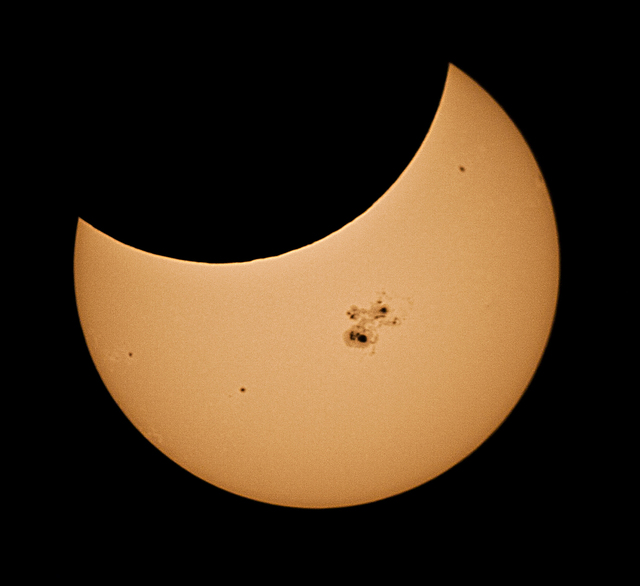
The Partial Solar Eclipse of October 23, 2014
 Click
here for the 2000 Christmas Duffer News
Click
here for the 2000 Christmas Duffer News

| We had a beautiful day to view
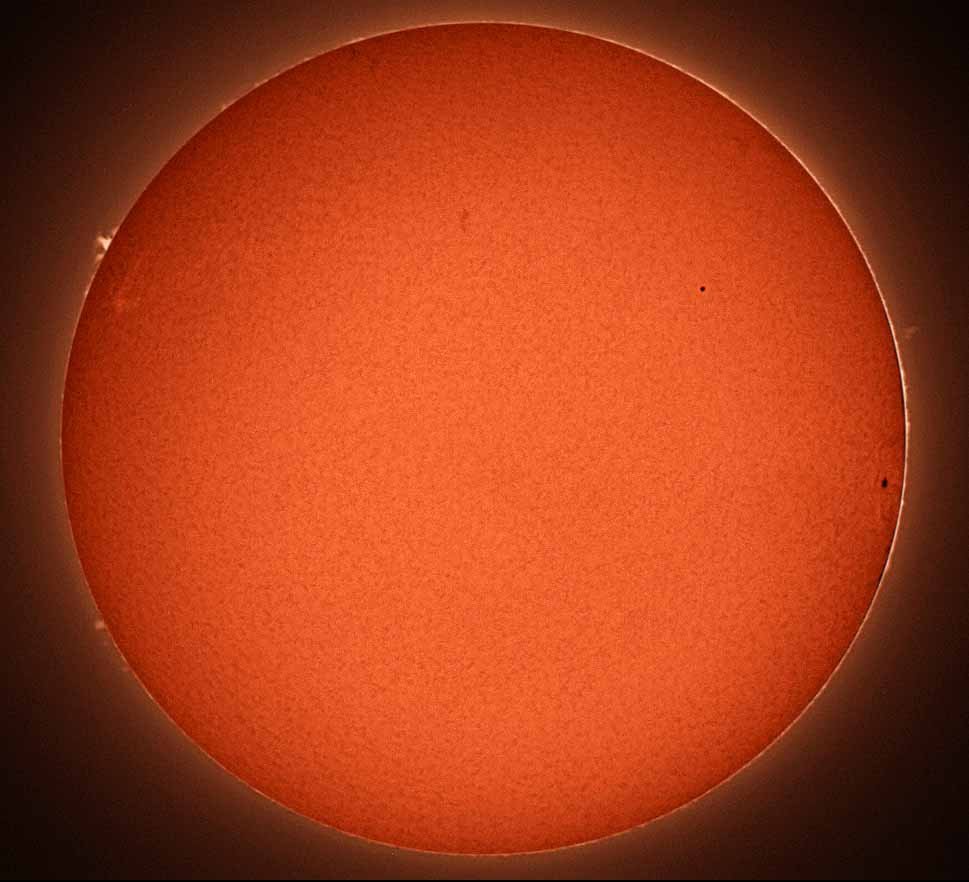
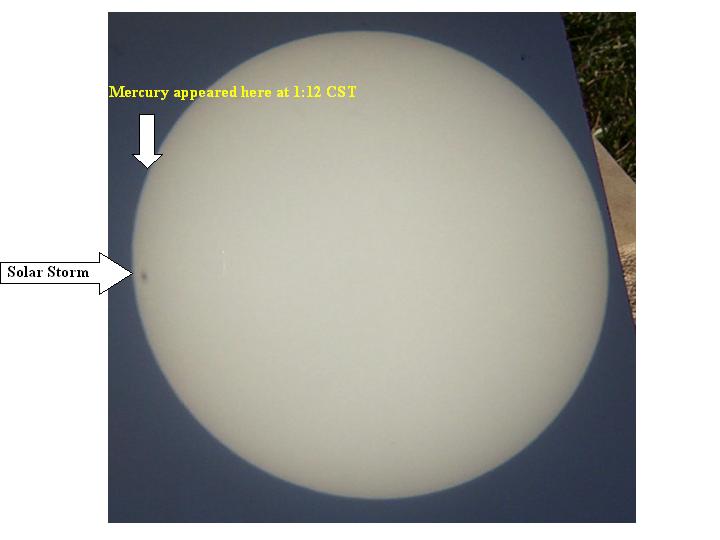
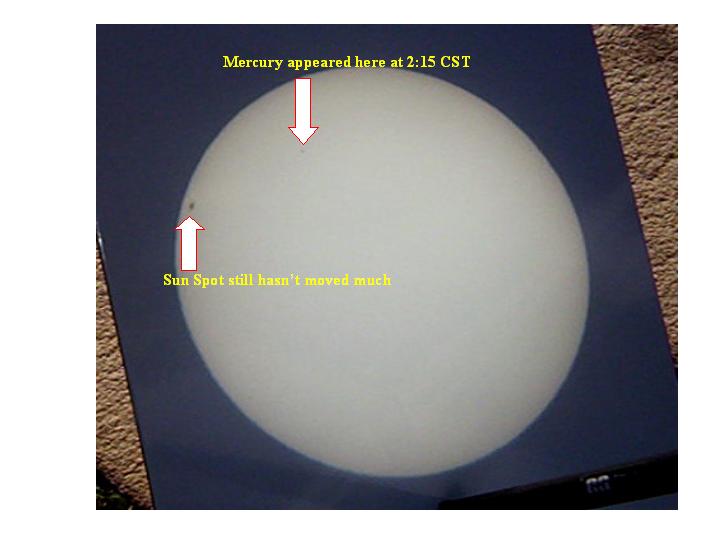
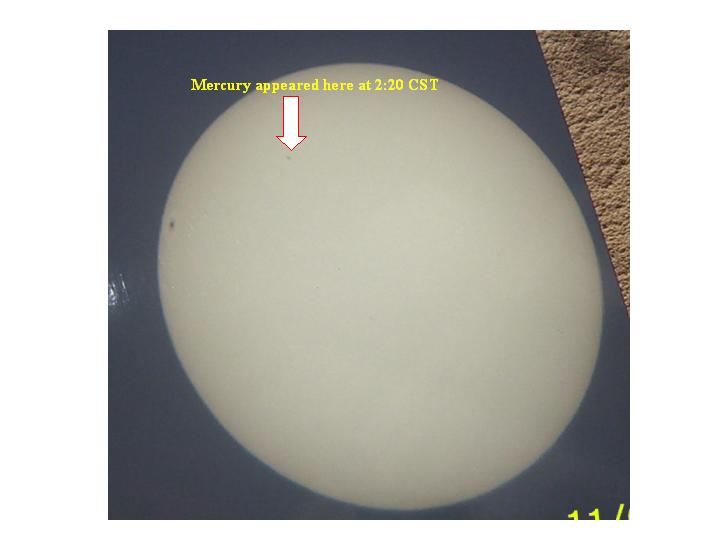
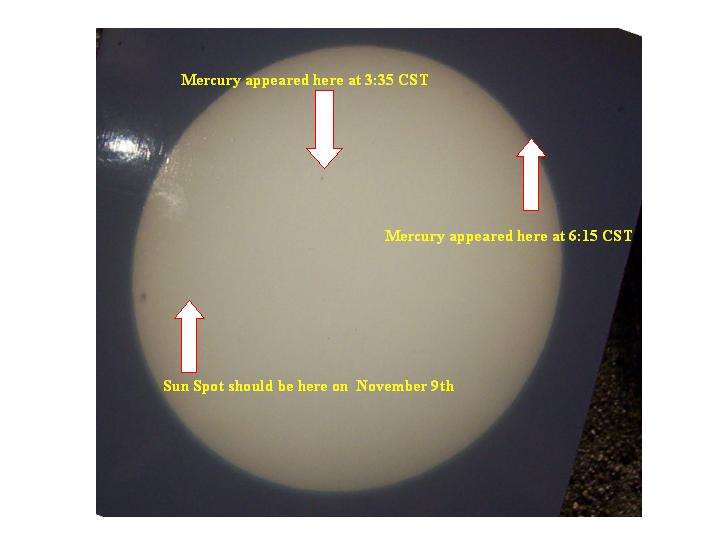
the transit of the planet Mercury in front of the Sun. The Gif
image above shows the time of the transit. The calculations were
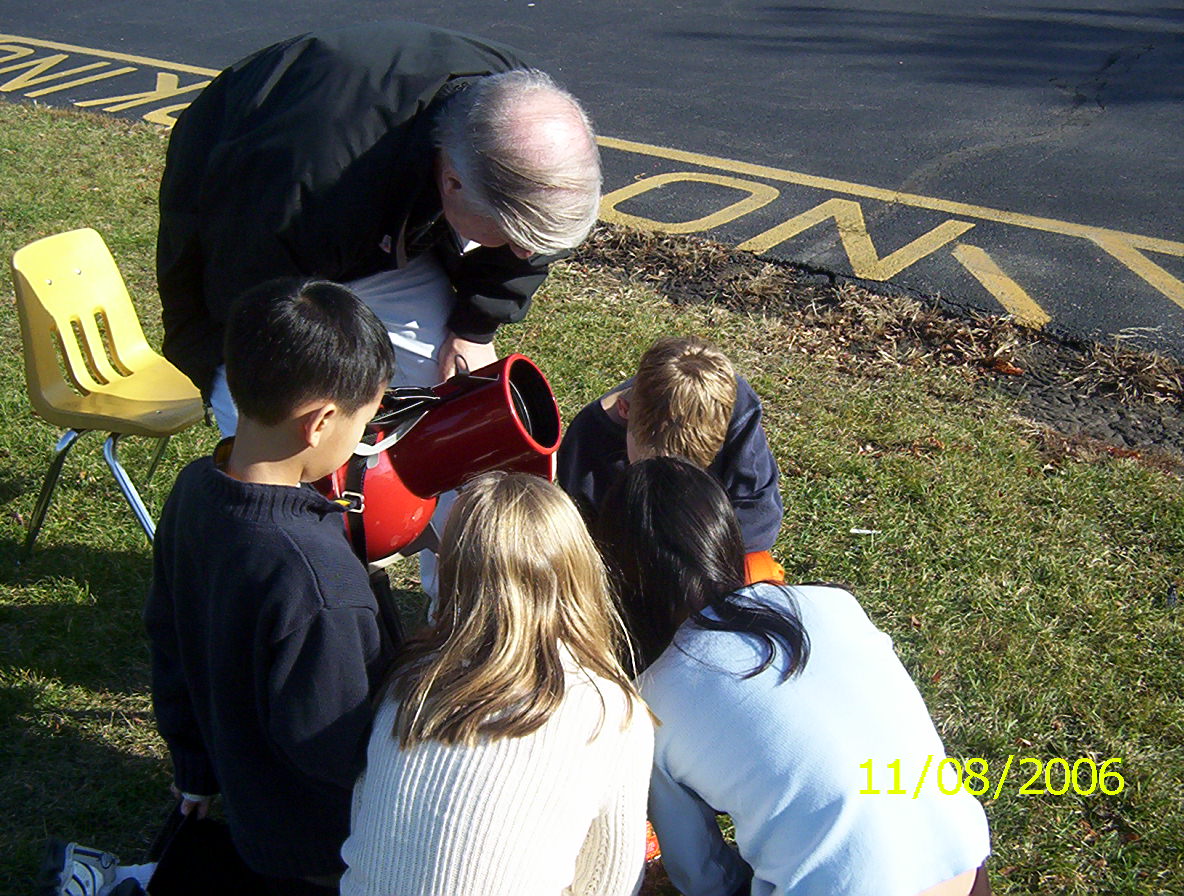
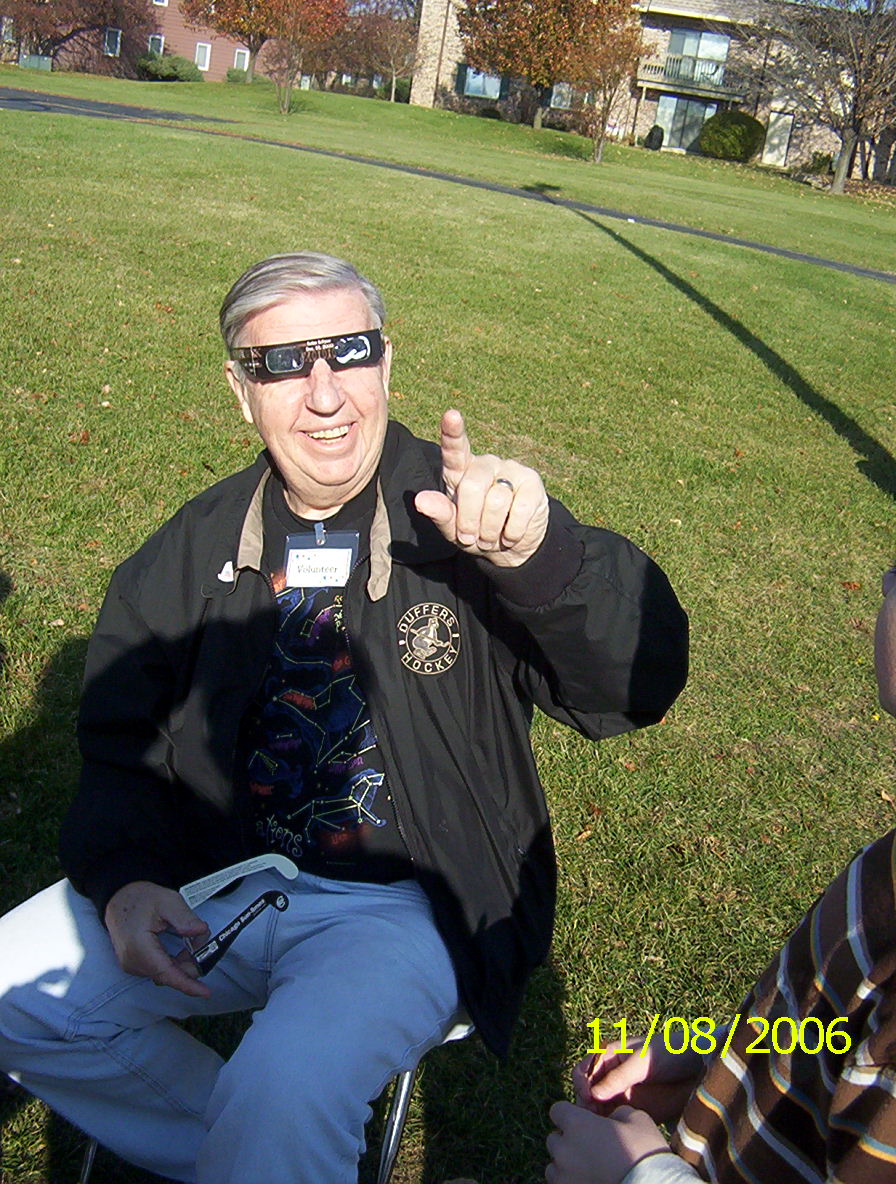
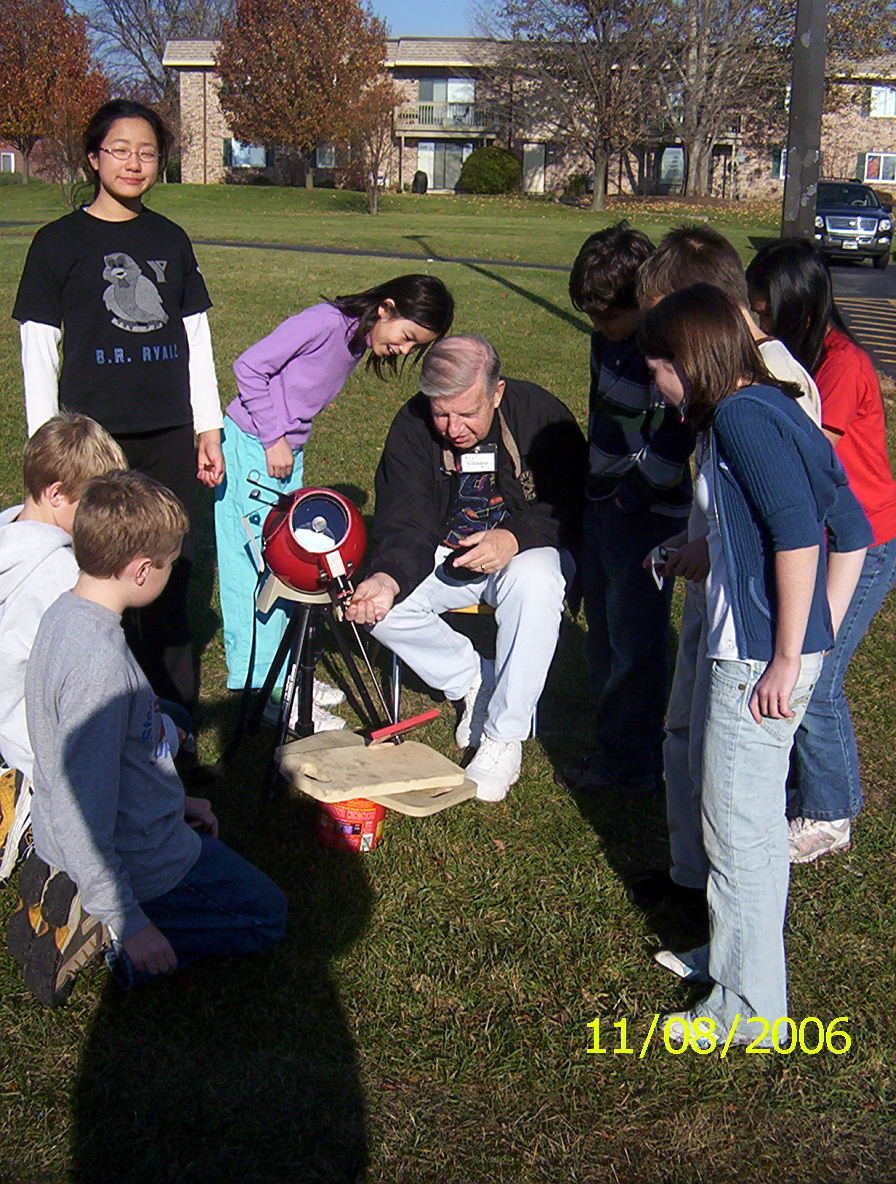
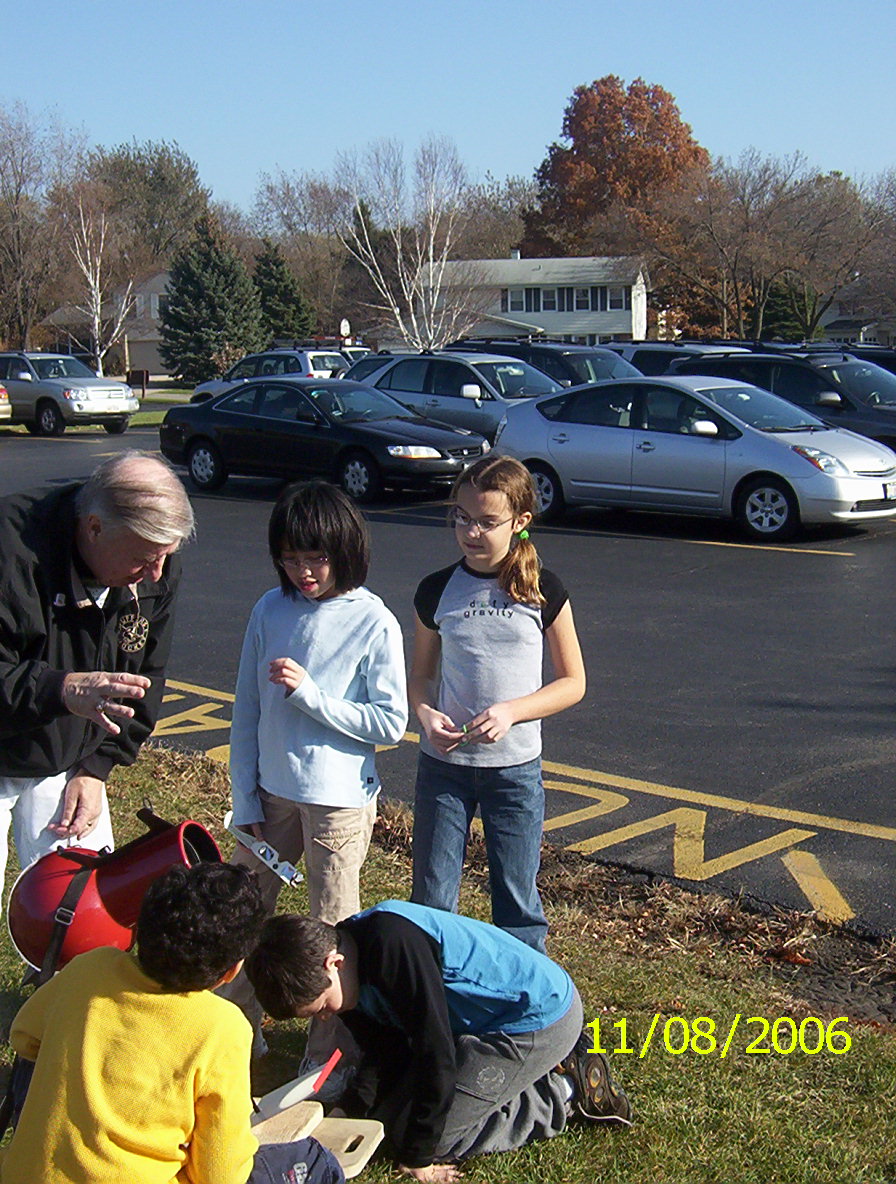
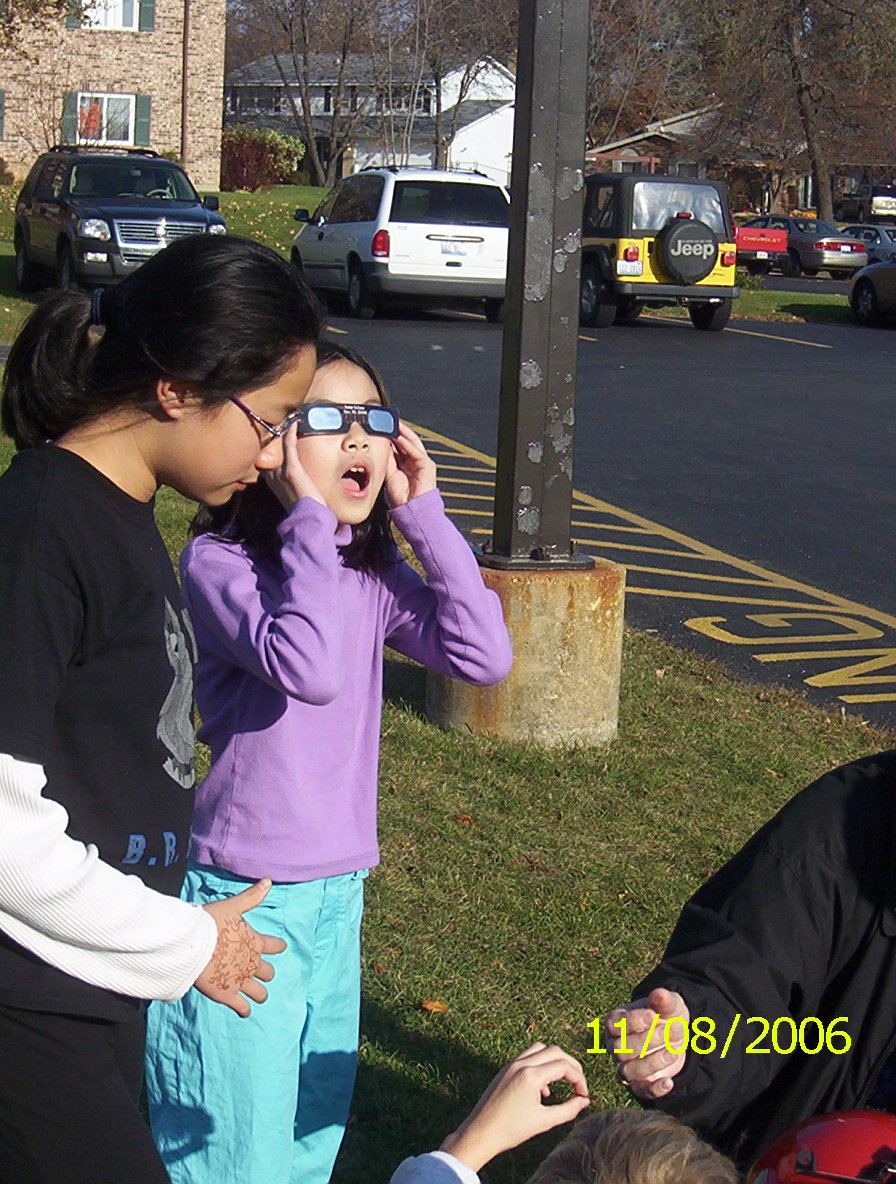
right on schedule. I went to Steeple Run School and students came
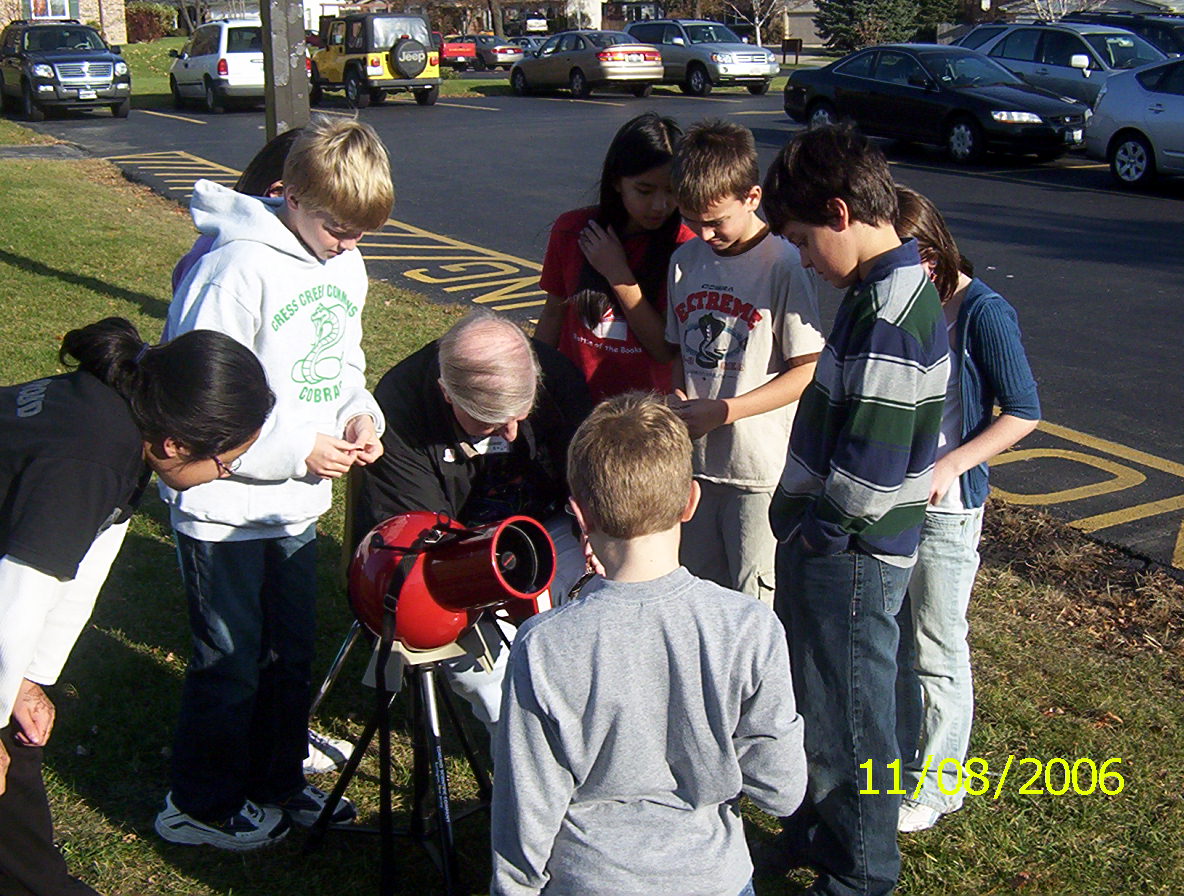
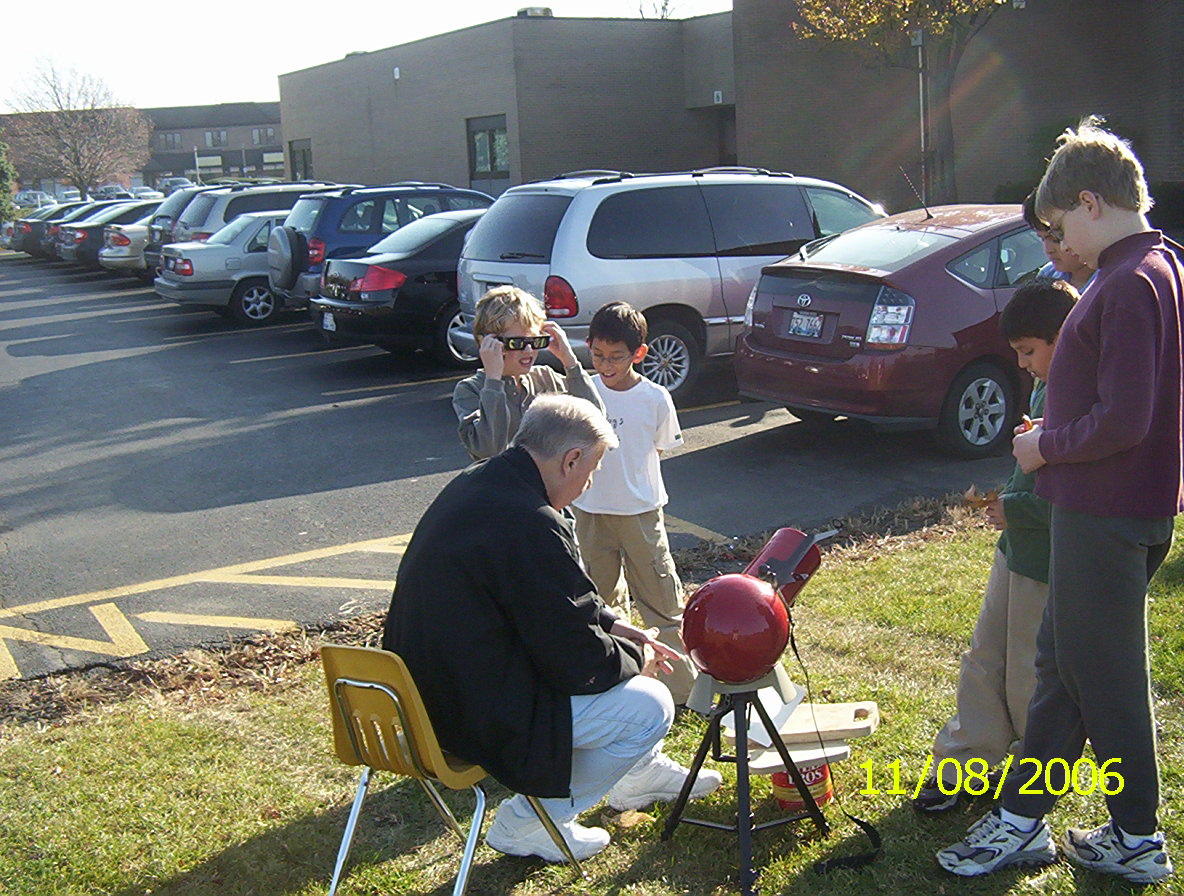
out in groups of 4 or 5. I set up my Telescope so that we could
view a safe projected image of the Sun.
Make sure you scroll all the way down to see the pictures from other places. Click on the images below to see the full picture. |
 |
 |
 |
 |
 |
 |
 |
 |
 |
 |
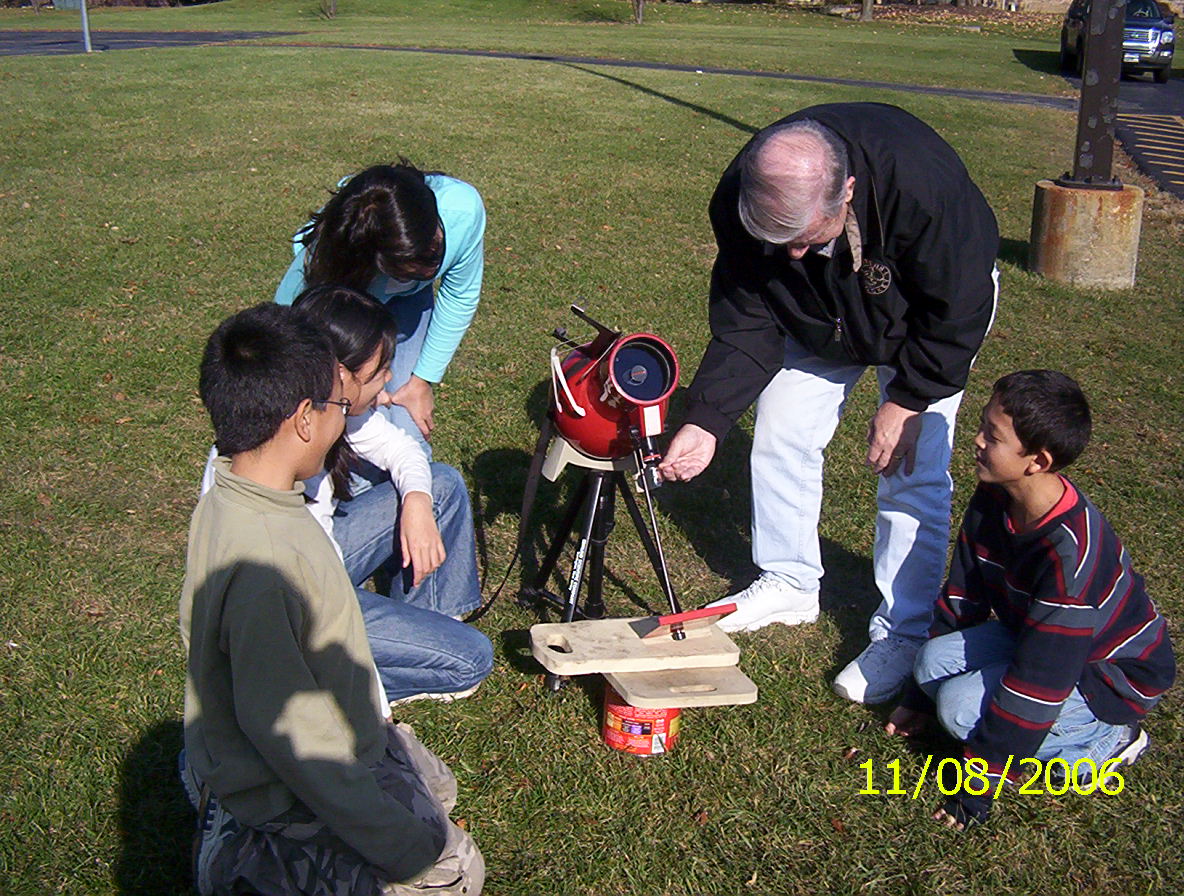
I used a leaf to demonstrate the danger of looking at the Sun. The leaf started burning in seconds. |

I projected the image of the Sun and Mercury on to the screen, so that everyone could see the event at once. |
 |
 |
 |
 |
 |
 |
 |
 |
Students were amazed at how fast that the Earth was spinning.
(We had to move the Telescope every few minutes to keep the Sun on the screen)
 |
| This SOHO image was taken on
November 7, 2006, and it shows a large solar storm on the far left that
rotated into view on the day of the Transit. The solar Storm on
the right rotated out of view. Image was from http://spaceweather.com/
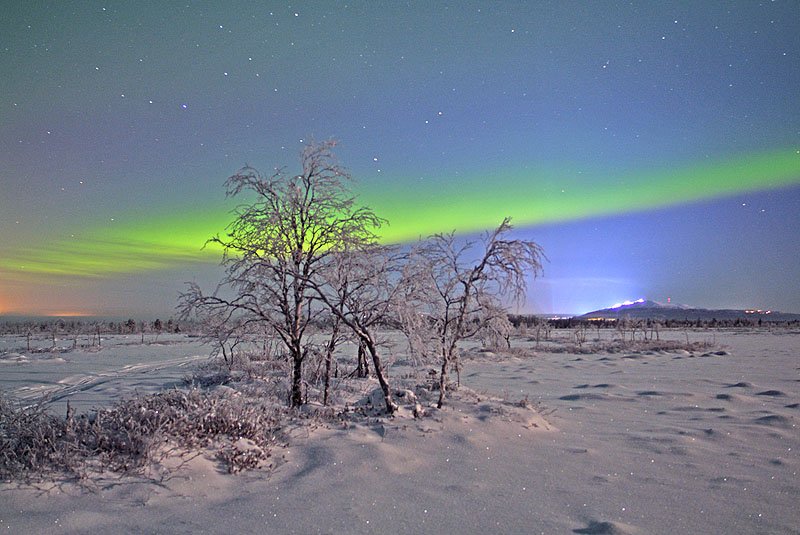
When the solar wind stream first hit Earth on Nov. 9th, the impact spread auroras as far south as Illinois in the United States. Since then, the display has retreated to Alaska, Canada and Scandinavia. Oh, to be in Finland!
|
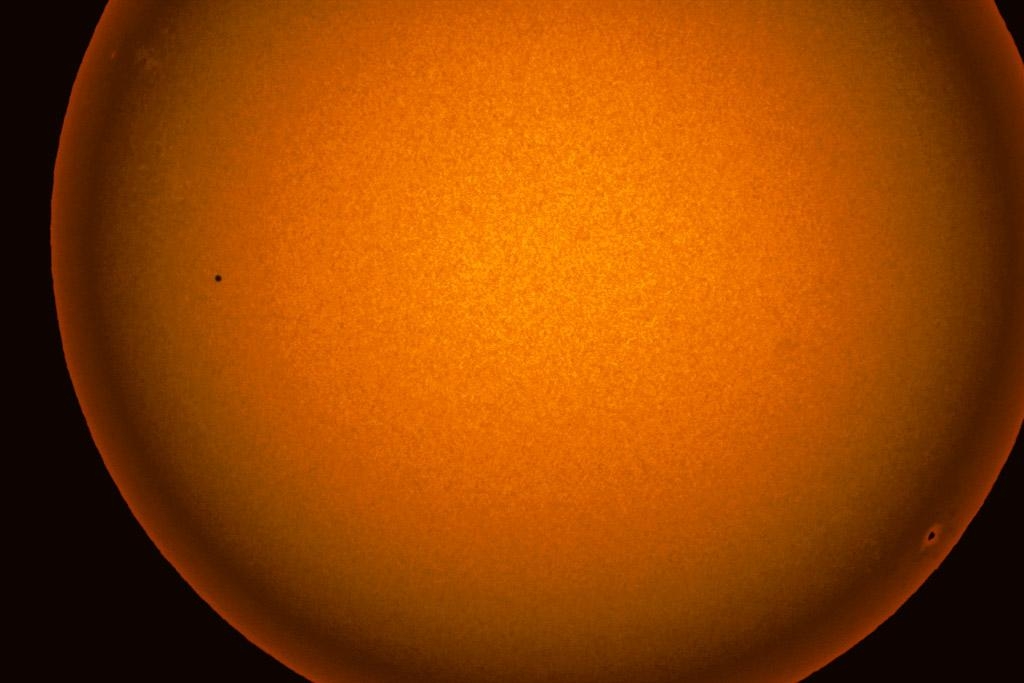
Photo
by Ron
Hodges, Midland Tex USA Nov.
08 |
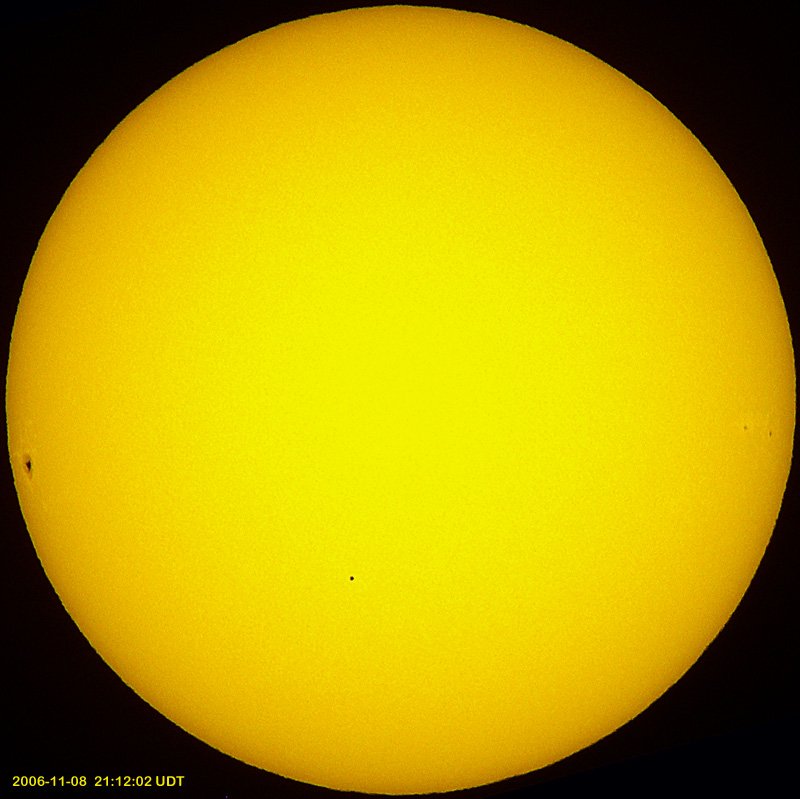
Photo by Howard Eskildsen, Ocala, Florida Nov. 08
|

Photos by Howard Eskildsen, Ocala, Florida Nov. 08 |
 |
|
Adrian
Guzman San Jose, California Nov.
08
|
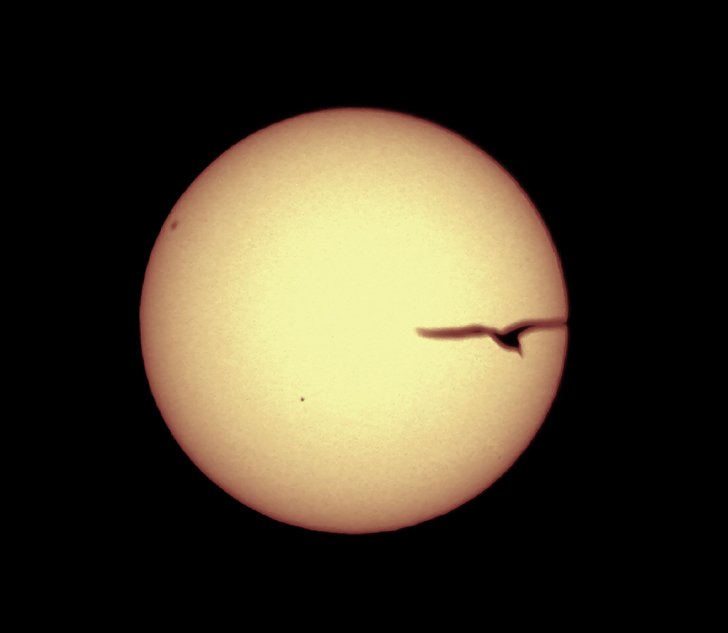
Ron Wayman, Tampa Florida Nov. 08 |
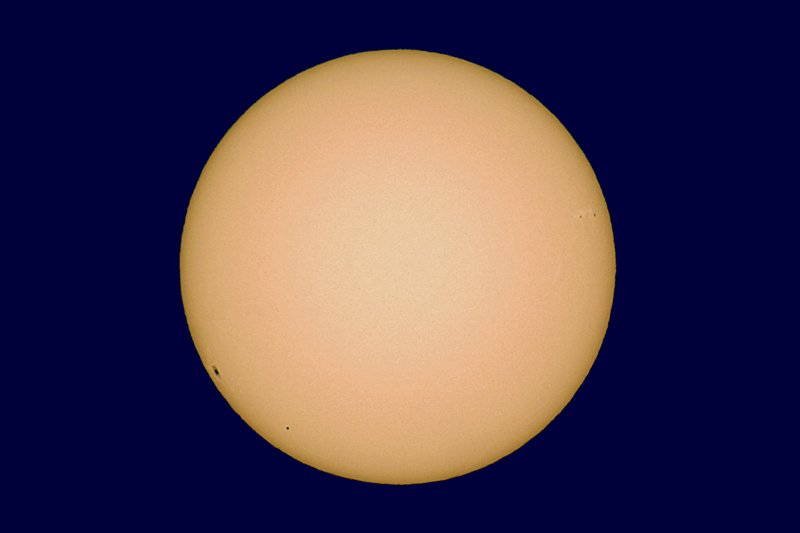
Alan
Dyer, southwest of Calgary,
Alberta, Canada Nov. 08
|
Sun-Times Columnists, Zay Smith
named my Pluto site the "QT"
Internet Site of the Week for September 10, 2006: He wrote, "A
glimpse at how large the universe is, showing not only how small the
diminished dwarf planet Pluto is, but also how small Earth is, and even
how small the Sun is, and QT is not mentioning this site, not for a
minute, just because it quotes QT several times, is at http://www.lopatka.net/planets/index.htm.
"
|
I went to the Adler Planetarium to watch the June 5th, 2012 transit of Venus.
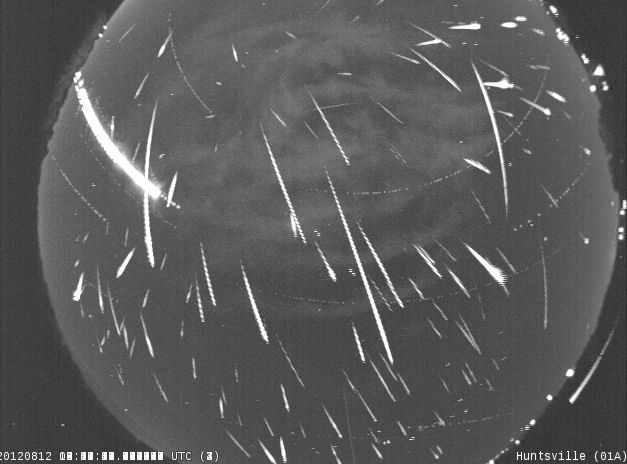
"There are 289 fireballs, 183 on peak night alone." To illustrate the intensity of the shower, Cooke offers a composite image of all the fireballs over the Marshall Space Flight Center on August 12th. "It was a great show."
Credit: Vaibhav Tripathi Night sky watcher Vaibhav Tripathi took this photo of a Perseid meteor from the Santa Cruz Mountains near Palo Alto, Calif. on August 12, 2012.
Credit: David Kingham/DavidKinghamPhotography Night sky watcher David Kingham took this photo of the Perseid meteor shower from Snowy Range in Wyoming on August 12, 2012.
|

Credit: Krystal DentonNight sky watcher Krystal Denton took this photo of Venus, moon, and Jupiter in perfect alignment along with an unexpected meteor falling on August 12, 2012 from the Lost Dutchman State Park in Apache Junction, Ariz. |
On August 13, 2012, Venus had an encounter with the waning crescent Moon on August 13, 2012.

"The blue-sky occultation of Venus on August 13th was a neat sight," says Dyer. "Here in Alberta, Canada, the occultation occurred at about 2:11 pm MDT. The composite image shows 6 images taken moments apart, recording Venus disappearing behind the advancing disk of the waning crescent Moon."
This rare daylight astronomy event was so hot in Henderson, Nevada, that photographer Jim Werle could barely touch his equipment. "It was 110 degrees outside," he explains. Nevertheless he managed to record several excellent images.
Thanks to Spaceweather.com
The Sun produced some huge fireballs when we were in Galena with my telescope.
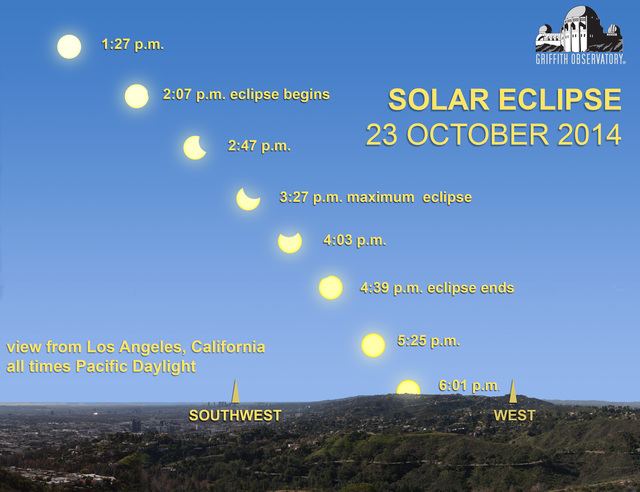
The Partial Solar Eclipse of October 23, 2014
|
Permission e-mails: Howard
Eskildsen, Ocala, Florida Nov.
08 Hi, You have a very nice web site and I am delighted to share my photos with you. Keep up the great work with the kids. A few of them will get hooked on astronomy, and the rest will remember it for a lifetime. Regards, Howard
Adrian Guzman San Jose, California Nov. 08 Yes
Greg you can use my photos of the transit Adrian
Guzman.
Alan
Dyer, southwest of Calgary,
Alberta, Canada Nov. 08 Hi Greg, Sure, go ahead and use the photo as you've described. Thanks for asking! (Love the Mark Twain quote -- time have not changed!) -- Alan
Ron Hodges, Midland Tex USA Nov. 08 Dear Greg , Permission is granted to use my image with credit as you stated . I appreciate what your doing and interest in astronomy . Hope you enjoy it ! Good luck !! Ron Hodges http://users.apex2000.net/ronlhodges/
Ron
Wayman,
Tampa Florida Nov. 08 Greg, You are certainly welcome to use my Mercury transit image. I will be looking forward to seeing it on your web site. I liked your method of
capturing the transit, it looked like the students were very interested. I'm still pretty new to astronomy, about 4 years, I became interested during the Leonid's of 2001 and got my first telescope in late 2002. You don't have to have expensive equipment to view Sun Spots. I have a
collection of Sun Spot images I have taken with a rather crude setup with a pair of cheap 7x35 binoculars, a pair of $1.00 solar sunglasses, and a digital camera.
Ron
Go to Lopatka's Astronomy Links
|


